
On family patterns, self-acceptance, and understanding ourselves before trying to change
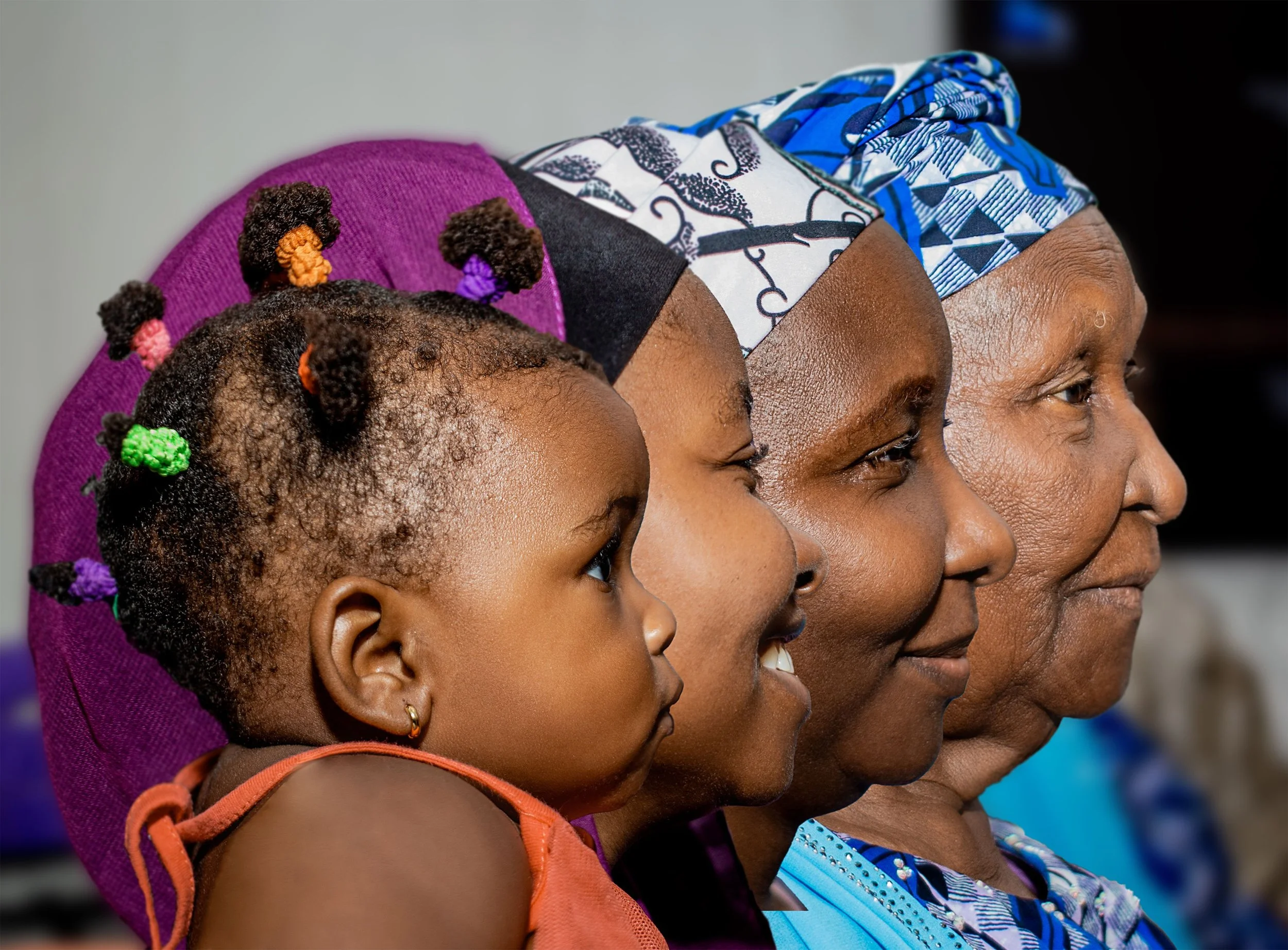
A couple of days ago, I was talking to my best friend about our bodies.
We were talking about body types and the parts of ourselves that haven't always matched whatever version of a woman's body we're currently being told is most desirable. And at some point she mentioned looking at a part of her body and remembering that it came from her mom, and I giggled quietly because in my ongoing journey toward greater self-acceptance and self-love, I do something similar.
Sometimes when I look at my own body… the parts that aren't particularly hourglass-shaped or whatever shape we're supposed to be aspiring to at the moment… I think, ‘Well... I got it from my mama’, and strangely, that helps. Suddenly I'm not just looking at my body through the lens of whether or not it measures up to some cultural ideal… I’m looking at lineage.
This is my mother's body… my grandmother's body… the bodies of European women who came before me… women who lived whole lives in bodies shaped something like mine.
And somehow, at that very moment, my body stops feeling quite so much like an isolated object I'm supposed to perfect and idealize. It becomes part of a much longer story.
Then, a couple of days later, I was standing in the bathroom appreciating my belly that’s shaped just like my mother’s belly and very likely like her mother’s belly when another thought occurred to me:
Why do I only do this with my body?
What if I looked at some of the other parts of myself I've spent years trying to change and thought, in the gentlest of ways, ‘Oh. I got that from my mama too.’
The way I run around and take care of everything and clean the house furiously and refuse to sit down and just be until it’s all done… I got that from my mama too. For both of us, it comes from such a loving place of wanting to tend to the home that our loved ones live in and a bit of an unease with chaos and mess.
And the way I self-regulate at times by lovingly stroking the skin of a person or pet I love… hey, I got that from my mama too. And looking at it in context of my mother’s life… losing her mother at a young age and immigrating from a Soviet country in her late 30s, and all the things she had to navigate and carry… I can't know exactly how those experiences shaped her, but I imagine she needed ways to soothe herself and find what comfort she could.
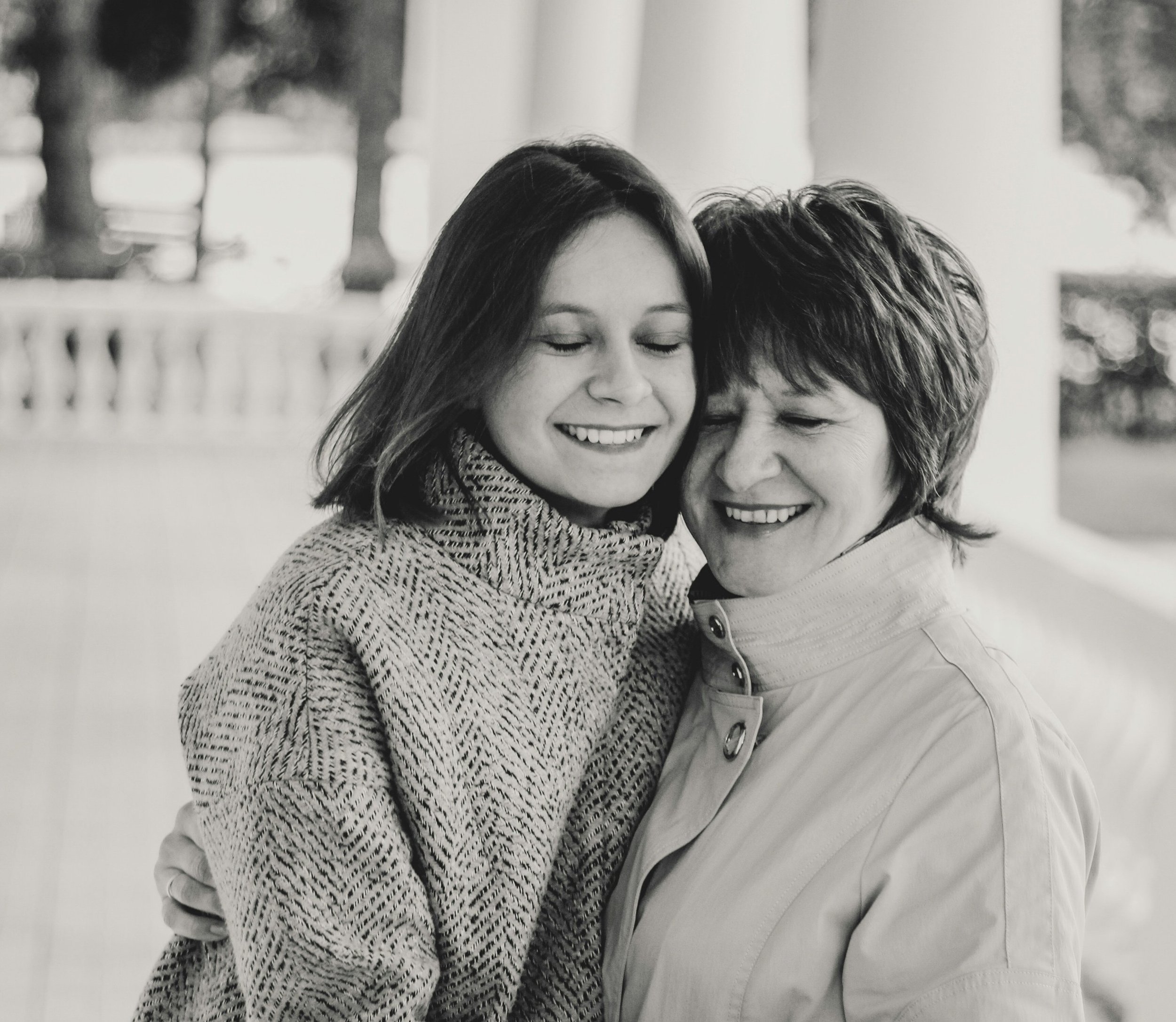
Sometimes "I got it from my mama" isn't exactly a loving thought
Of course, I know that when we recognize something in ourselves that we also saw in one or both of our parents, the reaction isn't always a little giggle or a moment of tenderness.
Often it’s a begrudging and exasperated sigh. Ugh. I swore I would never be aloof like my mother, and here I am, forgetting what needs to be done… Or I promised myself I wouldn't prioritize work over my children the way my father did, and here I am telling them to close the door because Mommy is working when all they want is a few minutes of my attention.
Sometimes a very real sense of, If this hadn't been passed down to me, maybe I wouldn't have to struggle with it so much now. And I don't want to gloss over that. There are things we inherit, learn, or absorb from our families that have genuinely hurt us. There may be patterns we’ve spent years trying to understand, unlearn, or make sure we don't repeat. Recognizing where something came from doesn't automatically make it feel better, and it definitely doesn't mean we have to feel grateful for everything that was passed along.
But I wonder if there's another possibility too… What if understanding where a part of us came from could offer something different from either blaming our parents or blaming ourselves? What if we could become curious about its history, even when we're not particularly happy that it's part of ours?
What if we could become curious about its history, even when we're not particularly happy that it's part of ours?
What else did we inherit?
Maybe it's the part of you, like me, that has trouble settling down at night until everything is organized and put away... Maybe it's the part that anticipates… The one who prepares… The one who worries… The one who always notices what might go wrong. Maybe it’s the part that wants to make sure everybody is okay or the part that has a hard time resting when there's still something that could be taken care of. Or, maybe it’s the part that sometimes believes being prepared might keep something painful from happening.
For me, some of those things may have come from my mother. Some may have come from my father, or grandparents, or culture. Some may be temperament. Some may be things I watched and absorbed without ever consciously deciding to. Some may be ways my own nervous system learned to protect me because of experiences that were mine alone. I don't know that we can draw a neat line backward through every part of ourselves and say, ‘There. That's where this came from.’ But I find myself wondering what might change if, before asking how to get rid of this quality we have, we became curious about where it came from.
Because I can look at a physical feature and think ‘Of course. My mother has that,’ and there's often affection in the recognition and sometimes even pride. And what if I could offer that same recognition to some of the parts of myself I find harder to love?
What if I could offer that same recognition to some of the parts of myself I find harder to love?
We have ideals for our inner lives too
As a society, we talk a lot about the impossible standards we place on bodies. We talk about which body shapes are currently celebrated, which features are desirable, and which ones we should accentuate, minimize, tighten, smooth, lift, shrink, or change. But I've been thinking about how we do something so similar with our inner lives.
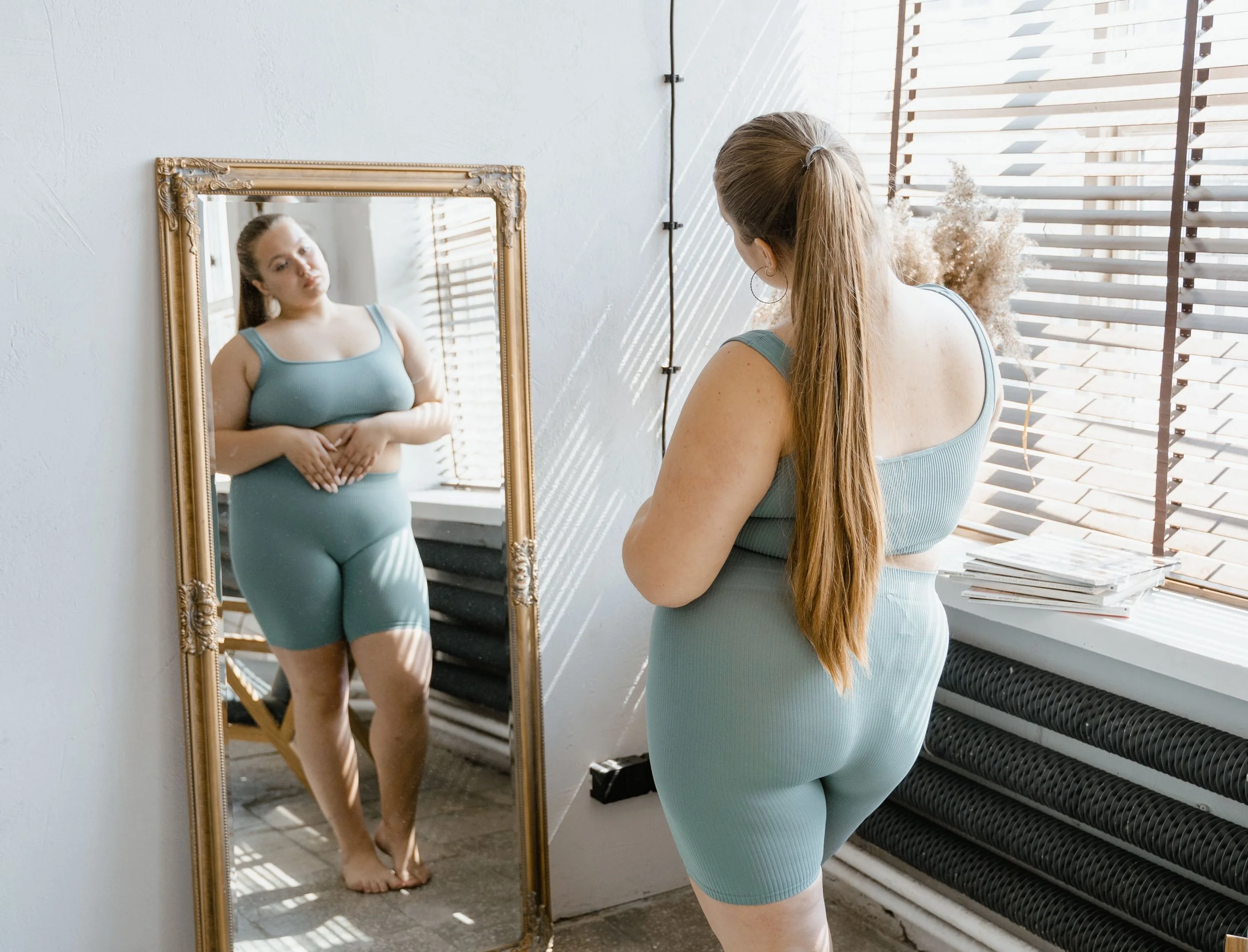
Society has preferred ways of being too.
We're supposed to be easygoing. Confident. Independent. Spontaneous. Unbothered. Chill.
Productive… but somehow never stressed.
Emotionally available… but never too emotional.
Organized… but not rigid.
Sensitive… but preferably only in the charming ways. :)
We should have needs, because we're healthy humans who can express our needs... but not so many that anyone feels inconvenienced by them.
We should be vulnerable, but preferably in an articulate, self-aware way that doesn't make anybody uncomfortable.
We should care deeply, but not worry. We should be conscientious, but know how to let things go.
We should be authentic, but also socially appropriate.
We should be ourselves… as long as ourselves happens to be relatively easy to be around.
And just as we can look at our bodies through the lens of whatever shape happens to be culturally preferred, we can start looking at our personalities, nervous systems, and inner lives through those same expectations and measuring sticks too. Too sensitive. Too anxious. Too much. Too needy. Too rigid. Too emotional. Not spontaneous enough. Not confident enough. Not easygoing enough. And then, naturally, we start trying to fix the shape of ourselves.
But what if this part has a history? What happens if, when we notice a part of ourselves we've been fighting with and instead of immediately asking, How do I change this? we ask: Where might this have come from? Who else in my family learned to be like this? What might this way of being have done for them? What did it protect? What did it make possible? What kind of world did this part learn to live in?
Maybe that need to have everything taken care of before resting didn't emerge from nowhere. Maybe the vigilance has a history. Maybe the preparing has a history. Maybe the worrying has a history. Maybe the fierce responsibility for other people has a history. And maybe the way we love has a history too.
And suddenly something we've been treating as an annoying nuisance or personal defect becomes part of a much bigger human story. Not necessarily something we want running our lives, but something we can begin to understand. ‘Oh, there you are. I know something about where you came from.’
Understanding isn't the same as excusing
Sometimes we choose judging over understanding ourselves or others because we worry that understanding a behavior or trait means condoning it. But… understanding a pattern doesn't mean we have to keep it. Knowing that something may have been passed down through generations doesn't make it destiny, and understanding why we behave a certain way doesn't mean the behavior can't hurt us or the people we love.
There are things we've inherited or learned that may no longer fit the lives we're trying to create. There are protective strategies that once made enormous sense and now make intimacy harder. There are ways of coping that may have helped our parents survive something that we no longer need to survive. And, there are beliefs about work, money, love, family, emotion, safety, success, rest, and belonging that we may decide not to carry forward in quite the same way.
Understanding doesn't sound like ‘Well, my mother did it, so this is just who I am.’ It sounds more like ‘Of course. Of course this is here.’ And I reckon that “of course” is a much kinder place from which to decide whether something needs to change than “Oh my G-d, why am I still doing this?” or “What is wrong with me?”
We inherit more than the things we struggle with
There's something else I want to remember as I think about all of this.
Personally, I don't want to look backward at the people who came before me and see only a collection of wounds that eventually became mine.
Because that's not all I got.
And it's not all you got either.
Maybe you inherited vigilance, but you also inherited attentiveness. Maybe you inherited worry… and, alongside it, devotion. Maybe the sensitivity you struggle with came with a beautiful capacity for depth. Maybe the caution you got came alongside discernment.
And maybe the same family that handed down fear also handed down resourcefulness, humor, intelligence, loyalty, creativity, determination, and the ability to begin again. The ability to survive things we can barely imagine.
We inherit whole, complicated human beings. And then we become another one.
Our inheritance isn't a tidy collection of good traits and bad traits. The very same quality can have different expressions. The attentiveness that helps us care for someone can sometimes become vigilance. The conscientiousness that makes us dependable can sometimes make it difficult to rest. The sensitivity that allows us to connect deeply can sometimes leave us feeling overwhelmed.
We don't have to divide ourselves, or the people who came before us, into the parts worth keeping and the parts we should be ashamed of. We can look at the whole picture.
We don't have to divide ourselves, or the people who came before us, into the parts worth keeping and the parts we should be ashamed of. We can look at the whole picture.
What do I want to carry forward?
So, the next time you notice a quality in yourself that you've spent years wishing you could change, perhaps there's another question you might try asking.
Whether it's perfectionism, overthinking, vigilance, people-pleasing, the need for control, the tendency to shut down, the tendency to over-explain, the part that rehearses every conversation, the part that notices everyone else's mood, the part that doesn't want to need anybody, or the part that wants everything put away before you can finally go to sleep…
Instead of immediately asking, Why can't you just stop? or What's wrong with me?, maybe ask something a little more interesting:
“Where did you learn this?”
Because I bet there’s a whole story waiting to be heard there. Children learn by watching, bodies learn by experiencing, families develop rhythms, cultures develop rhythms, generations adapt to the circumstances they're given, and then another generation arrives inside a story that's already being told and that began long before them.
And if I can look at my body and see my mother, my grandmother, my ancestry… what happens if we look at the parts of our inner world that way too? Maybe you can notice your need to organize everything before resting and smile a little. “Oh, hello. I know you.” Or maybe you can recognize a familiar worry without immediately launching a campaign to eradicate it? Maybe you can see the way you care intensely about people and truly understand that the line between care and worry has probably been blurry in your family for a very long time.
And with that understanding, maybe then we can also begin to ask,
‘Do I want to carry this forward exactly as it was given to me?’
Maybe I want to keep the care and loosen the responsibility… keep the sensitivity and loosen the shame around it… keep the conscientiousness and loosen the belief that everything has to be finished before I can rest… keep the loyalty without abandoning myself… keep the ability to anticipate without requiring myself to anticipate everything. Maybe I want to keep what still feels like love and soften what doesn't.
I don't have to hate what I inherited in order to change how I carry it.
And perhaps that's another way of looking at I got it from my mama. Not as an accusation, not as an explanation for everything, and not as a reason we can't change, but as an invitation to look at ourselves with a little more context, a little more curiosity, and maybe even a little more tenderness.
And perhaps it’s an invitation to recognize that we didn't begin our stories from scratch… that some parts of us have been here for a long time, and that understanding where they came from can help us honor them while still deciding what comes next.
What if we could say "I got it from my mama" with tenderness, even about the parts of ourselves we're still learning how to carry?
I'd love to know what comes up for you when you think about this. Is there a quality you recognize in yourself that you also see in someone who came before you? And does seeing its history change the way you see it or relate to it?
With ♡,