
Process Over Outcome: Stop Measuring Your Life by Where You ‘Should’ Be
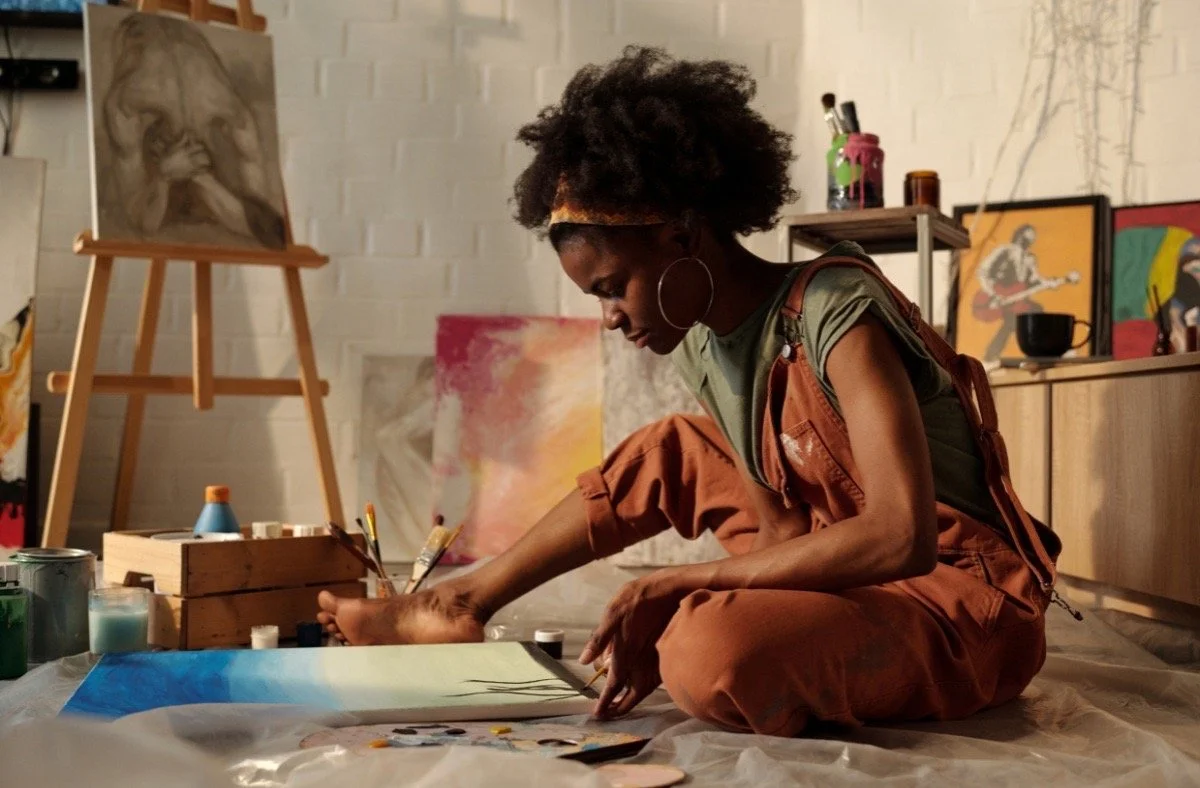
Last week, at the end of a long day... after I’d done what I could to tend to my work and myself... I noticed something unsettling inside me. I didn’t feel grounded or satisfied at all at the end of the day. Instead, I felt incredibly restless.
And as I sat with that restlessness, I started to hear the thought underneath it: If I’m doing all this work, shouldn’t something look different by now?
It was a familiar kind of discouragement that I’ve known many times before... the kind that shows up when I’ve been putting in a lot of real effort and intention with my energy, my health, my work, my finances… and yet the results are slow or still unclear.
Nothing is technically wrong. And yet, inside, it feels like I’m failing simply because the outcome hasn’t arrived yet. And that’s usually the moment I realize that I’ve started measuring my life by the scoreboard again.
When I look back, I can see that this pattern has shaped some of my most painful life moments. In those moments, my suffering wasn’t only about how bad something felt (whether that’s an emotion, a physical symptom, or a difficult circumstance). It was also about comparison: the comparison and deeply felt gap between where I am… and where I thought I should be by now… the comparison between the life I’m living… and the one a younger version of me imagined I’d be living by now.
I see this all the time with friends and clients, too. Of course there are genuinely devastating and unexpected events that take us by surprise and shake us… losses, illnesses, abrupt changes we never asked for. But outside of those moments, a surprising amount of our distress comes from the tension between where we are and where we believe we ought to be.
That gap can be brutal. And I’ve been there many times in my life. And because I’ve noticed just how much pain it causes to stay in that comparison, urgency, and self-doubt, I’ve come back time and time again to an understanding, orientation, and life philosophy that slowly changes how I live.
Focus on the process. Not the outcome.
Why We’re So Outcome-Focused
When something matters to us, we naturally fixate on outcomes — the external markers that tell us we’ve arrived, succeeded, or are finally safe. Outcomes are the job title, the relationship status, the healed body, the settled nervous system, the moment where we can exhale and say, “Okay. I’m good now.” For a close female friend from high school, it sounded like: “Ugh, I’ll never meet my person. I’ll never have kids.” At the time, marriage and family were the outcomes she most longed for — not just because she wanted them, but because she believed they would finally signal that her life had come together and she’d be able to exhale. For a male client of mine, it sounded like: “I’m in this position at work, but I should already be in leadership. I don’t even know if I have what it takes to get there.” What he was really saying was: I don’t feel settled in who I am until I reach that next rung.
And I totally get it. Of course we want things decided. Of course we want them completed and resolved. Of course we want them to work out already. Of course we want life to tap us on the shoulder and say, “Hey [insert your name here], I’m so sorry for the delay… here is your [insert what you most long for here] (job, wife, husband, raise, dream home, health, pain-free body, inner peace).” Outcomes give us something solid to hold onto and they often come with an almost immediate sense of relief.
And the idea of not focusing on outcomes can feel irresponsible or silly: If I don’t focus on the outcome, won’t I lose momentum? Won’t I fall behind? Won’t things stay unresolved forever? I used to think that too… For a long time, I believed that if I loosened my grip, I’d stop moving forward in life. But that’s not actually what the alternative (process-oriented living) asks of us And maybe, by focusing so heavily on outcomes, we’re actually losing something essential along the way — our capacity to live, breathe, respond, grow, be present, and stay connected to ourselves even before everything is resolved.

What Outcome-Focus Often Feels Like Inside
Here’s the part we don’t always notice when outcomes become our primary orientation: we end up living in a constant state of waiting… for relief, for certainty, for proof that we’re on the right track. And all the while, we’re gripping to something that hasn’t yet come, which keeps us in a perpetual state of anxiety, agitation, and unable to rest.
So, the issue isn’t that we care about outcomes. Caring is a beautiful human quality. The issue is what happens inside of us when outcomes become the primary way we orient ourselves and the only place that grants us relief.
Because when something really matters, outcome-focus often turns into a kind of internal pressure that sounds like:
This should already be done.
I’m running out of time.
Why isn’t this happening faster?
What if it never happens?
I’ve felt this in very real ways. From wanting my career to feel “fully aligned already,” wanting my health to come back to equilibrium on a specific timeline, wanting emotional clarity now so that I could finally relax and stop thinking about things.
Nothing was technically wrong, but beneath the surface, fear was slowly taking over the timeline of my life and starting to run the show. The urgency felt productive, but it didn’t feel intentional, grounded, or wise.
And if you think about it, outcomes, by definition, happen relatively infrequently. A promotion… A relationship milestone… A health breakthrough… A big resolution.
Which means that when outcomes become the primary place we’re allowed to feel okay, most of life becomes something we’re enduring rather than fully living.
What “Process Over Outcome” Actually Means
When people hear process over outcome, they sometimes imagine passivity, waiting around, lowering our standards, or pretending not to care about what happens.
That’s not it.
Process-oriented living doesn’t mean you stop wanting things or stop moving forward. It means you shift where you place your attention and worth while you’re moving.
When we’re focused on outcomes, we’re often living several steps ahead of ourselves — measuring, evaluating, waiting for proof that our life is going right. Process-oriented living brings us back to something much simpler and much harder: what we can actually attend to, control, and influence right now.
I actually first started to learn and adopt this life orientation most readily while watching my favorite basketball team, The Boston Celtics, and interviews with their coach, Joe Mazzulla. While everyone is obsessed with winning, he consistently brings the team back to what they can control: their decisions, effort, communication, and presence. Not the scoreboard. And he does this no matter the outcome. Regardless of whether they won or lost, he continuously points out what the process of winning looks like and the specific things they need to get better at.
And that’s the heart of process-oriented living.
Process-oriented living is about orienting toward what’s available to you now, rather than postponing your well-being until a future moment arrives. It’s about investing your energy in the choices, behaviors, and way of being that are within your reach even when the bigger picture is still uncertain and unfolding Where an outcome focus asks “Am I there yet? Did this work? Did I get what I wanted? Did I get where I was going? Did I become who I was supposed to be?”, a process focus shifts the attention to what’s workable right now and asks “What’s mine to practice here — today, in this moment — regardless of where this leads?”
Whether you’re healing old wounds, building a career, navigating relationships, or trying to get through a hard season, outcomes and results matter. But, they’re not where true peace and happiness lives. Because, internally, when you’re outcome-focused, it can feel like you’re failing simply because the outcome hasn’t arrived yet.
Peace lives in focusing on what’s actually within your influence: how you show up, how you make decisions, how you treat yourself when things are uncertain, and how you stay connected to yourself in moments that don’t feel like the final victory lap.
Happiness, too, turns out to be much more of a way of traveling than a destination you finally arrive at.
Process-oriented living doesn’t mean you stop wanting things or stop moving forward. It means you shift where you place your attention and worth while you’re moving.
A lot of what I explore inside Happy from the Inside Out® is about learning how to live with more self-trust and presence while life is still unfolding — instead of postponing peace until everything is finally figured out.
The Real Tension: Alignment vs. Pressure
At first glance, it looks like the tension is between process and outcome. But more often, the real tension lives between alignment and pressure.
Pressure often comes from fear and tends to sound like:
What if I’m falling behind?
What if I lose my chance?
I need to have this now.
Alignment comes from self-trust and sounds a bit different:
Does this choice actually feel right in my body?
Am I staying connected to myself while moving forward?
Am I learning what I need to learn and focusing on what I can control along the way to my goal?
Would I make the same choice if I weren’t afraid?
Both make absolute sense (because, of course, we want the best for ourselves), but they lead to very different life experiences. Think back to the last time fear drove the timeline of your life. Chances are, the decision came quickly but it didn’t necessarily bring the relief you were hoping for. And maybe, it even created more tension, more self-doubt, or a sense that you’d moved too fast without all of yourself fully on board.
And I get it. The fear feels very real. And this is where I want to say to the parts of you that are afraid and who are driving the fear you feel: Choosing to focus on the process doesn’t mean stopping your life and waiting around forever. It means continuing moving forward, the same way you would otherwise, but without abandoning yourself to escape the discomfort of not being there yet” along the way.
Life as a Dojo, Not a Finish Line
If you know me, you know I love a good metaphor. And lately, I’ve been thinking about life less like a race and more like a dojo. A dōjō (道場; Japanese pronunciation: [doꜜː(d)ʑoː]) is a hall or place for immersive learning, experiential learning, or meditation. It’s traditionally applied to the field of martial arts (such as Karate, Judo, Aikido) or other traditional arts (like yoga or calligraphy). More than a gym, it’s a specialized environment designed for holistic development—physical, mental, and spiritual. The term literally means "place of the Way" in Japanese.
A dojo isn’t a place where you win. It’s a place where you practice. It’s a place where you repeat movements, notice your habits, slow down your reactions, refine fundamentals, and learn how to stay present under pressure.
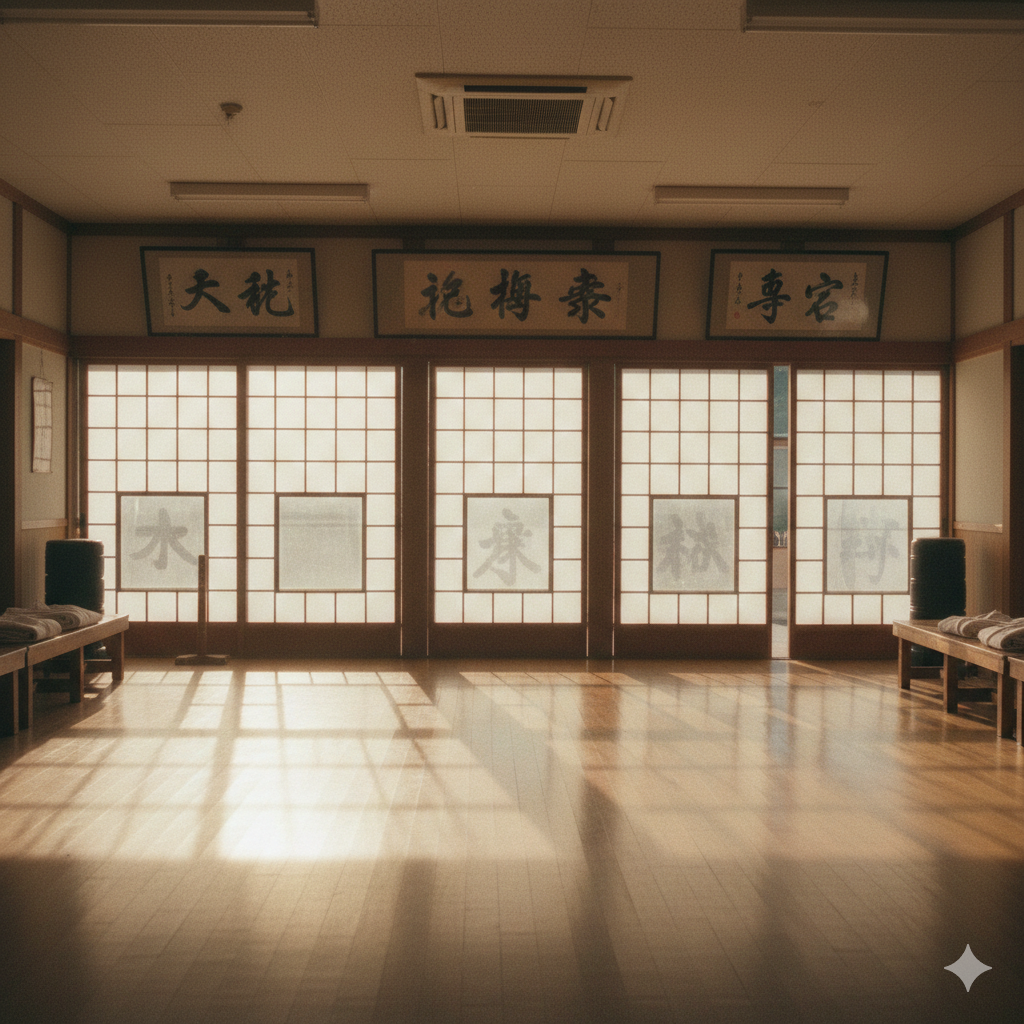
Progress in a dojo is rarely about winning fights. Instead, it’s measured through continuous improvement (i.e., kaizen), things like: a belt system (Kyu/Dan), where each color denotes a milestone and represents mastery of specific techniques, mental fortitude, and behavioral maturity; stripes (Degrees) that indicate incremental progress between major belt promotions, thereby rewarding consistent attendance and skill development; mastery of fundamentals that’s not just about learning "flashy" moves but about refining basic stances, techniques, and movements; performance under pressure (Randori/Kumite), like the ability to apply techniques against a fully resisting partner during sparring; and code of conduct (Dojo Kun), which refers to a student's attitude, humility, and adherence to respect.
When you treat life as a dojo, it stops only being a place where you “win” and becomes a place where you practice, and the question shifts from “Did I get there?” to “How am I practicing being me in this moment?” Can I tolerate not knowing yet? Can I stay present when things feel unresolved? Can I keep showing up with integrity even when there’s no certainty available?
When you treat life as a dojo, it stops only being a place where you “win” and becomes a place where you practice.
What Choosing Process Looks Like in Real Life
For me, choosing process over outcome has focused on two things:
Shifting my metrics of success
In relationships, for example, success used to mean: Did it last? Now it looks more like: Did I stay self-led, honest, and boundaried? Because that’s a success regardless of the outcome. A relationship that lasts but requires self-abandonment isn’t actually a win.
Naming what I’m actually practicing
In my work, for example, that’s looked like remembering that I’m not just creating a thriving business. I’m practicing discernment without self-abandonment, pacing without guilt, building without urgency, and making decisions that honor my capacity instead of overriding it in the name of progress. Those are not just tasks, but life skills - the kind that carry into relationships, health, and every season of my life that follows. They’re skills that I learn and relearn in the dojo of my life.
A Question to Sit With
If something in you is saying, “I want to live with more intention around process, not just outcome,” maybe the question then isn’t:
How do I get where I want to go faster?
Maybe it’s: How do I stay connected to myself while I’m on the way?
And just as importantly: Would I make the same choice if I weren’t afraid?
Process over outcome isn’t about giving up on what you want. It’s about staying connected to yourself — and to what matters — while you want it. And that alone can change how the next step unfolds.
If this reflection resonates, much of the work I explore inside Happy from the Inside Out® is rooted in this way of living — focusing less on proving, rushing, or arriving, and more on learning how to stay connected to yourself while life unfolds.
And if you appreciate honest conversations about the real process of being human, my Heart Share Circles are spaces where we explore these themes together.